
AI’s Trillion-Dollar Promise: Navigating the S&P 500’s Record Surge Amidst Market Volatility
The S&P 500 has surged to a new record high, largely propelled by an unprecedented boom in artificial intelligence (AI) stocks, while the New Zealand market experienced a notable slip. This latest market ascent draws parallels to historical bounce-backs and raises critical questions about sustainability and investor prudence.
Market analysts are keenly observing the dynamics of this current rally, comparing it to previous periods of rapid growth. The underlying drivers of this surge, particularly the semiconductor sector, are under intense scrutiny.
| Company | Change | Current Price | Market Impact |
|---|---|---|---|
| Marvell Technology | Up 32.52% | US$290.79 | Added US$60 billion to market cap |
| Alphabet Group | Down 3.81% | US$358.39 | Announced US$80 billion AI infrastructure spending |
| S&P/ASX 200 Index | Up 0.88% | 8801.3 points | Regional market performance |
| Vista Group | Down 7.38% | $2.26 | Affected by light trading post-surge |
| a2 Milk | Down 11c | $6.59 | Anticipating export volume statistics |
| Ebos Group | Down 2.54% | $19.20 | Reached eight-year low |
The AI-Driven Market Phenomenon
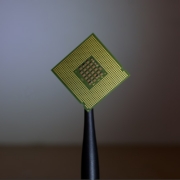
The current market surge, particularly within the S&P 500, is overwhelmingly attributed to the burgeoning artificial intelligence sector. Semiconductor chipmaking stocks, essential for powering data centers and AI infrastructure, are at the forefront of this rally.
A prime example is Marvell Technology, which saw its market capitalization increase by US$60 billion after Nvidia CEO Jensen Huang suggested it could be the next trillion-dollar company. This highlights the immense investor confidence and speculative capital flowing into companies poised to benefit from AI expansion.
However, not all tech giants are experiencing uniform gains. Alphabet Group, Google’s owner, saw a decline despite announcing substantial investments in its AI infrastructure. This suggests a nuanced market perception of AI plays, where capital expenditure announcements can sometimes trigger short-term dips.
Historical Context and Investor Sentiment
This rapid two-month gain in the S&P 500 echoes historical precedents, including bounce-backs from the 1970s oil shock, the 2008 Global Financial Crisis, and the Covid pandemic in 2020. Intriguingly, a similar rapid surge occurred weeks before Black Monday in 1987, when the S&P 500 had climbed 39% by late August of that year.
Paul Robertshawe, Chief Investment Officer with Octagon Asset Management, observes a “new paradigm shift” supported by a strong economy and employment. He notes that “retail investors are at peak bullishness over AI stocks” and that currently, there are “no cracks in earnings and profits.”
“There is a new paradigm shift, and so far, it has been supported by a strong economy and employment.” – Paul Robertshawe, Chief Investment Officer, Octagon Asset Management.
Despite the current optimism, Robertshawe raises a cautious flag. He questions the sustainability of high profit margins in the long term, especially with increasing competition. The prospect of an “earnings bubble” developing is a significant concern for prudent investors.

New Zealand Market Performance and Specific Stock Insights
Across the Tasman, the S&P/ASX 200 Index showed a positive movement, rising 0.88% to 8801.3 points. This contrasts with some of the local market’s performance in New Zealand.
Several New Zealand-listed companies experienced notable shifts. Vista Group, a cinema management software company, fell by 7.38% on light trading, despite recent positive news. a2 Milk declined by a further 11c, with investors awaiting upcoming export volume statistics for clarity on its performance.
Robertshawe remains optimistic about a2 Milk’s fundamentals, stating that upcoming statistics should provide confidence. He also highlighted Tourism Holdings, trading at a 20% discount to its takeover price, suggesting potential hurdles but overall viability for the acquisition.
Conversely, Ebos Group reached an eight-year low, described as “friendless” by Robertshawe, while Mainfreight declined after a powerful run. Other decliners included Meridian Energy, Vulcan Steel, Napier Port, and Oceania Healthcare.
On the positive side, Goodman NZ, Hallenstein Glasson, Metro Performance Glass, and Promisia Healthcare all saw gains. Local tech stocks like Gentrack, Eroad, ikeGPS, and Blackpearl also performed well.
Pacific Edge completed a significant capital raise of $36.1 million, with the majority coming from existing shareholders, indicating strong internal investor confidence. Move Logistics saw a slight gain, with news of its founder’s passing prompting reflections on the company’s long history and transformation.
Scales Corp declared a final dividend of 12.5c per share, representing a total payout of 25c for the financial year, equating to 59% of its net profit.
The Bottom Line: Navigating AI’s Bull Run with Caution
The current market environment, heavily influenced by the AI boom, presents both significant opportunities and inherent risks for investors. While the rapid growth in AI-related stocks is compelling, the historical parallels to previous market exuberance, particularly the 1987 pre-crash surge, warrant a cautious approach.
For personal wealth management, it is crucial to avoid being swept up in “peak bullishness.” Diversification remains key. While exposure to innovative sectors like AI is important for growth, it should be balanced with investments in established, stable assets. Regularly review your portfolio’s risk profile against your long-term financial goals and liquidity needs. Consider the potential for an “earnings bubble” and the impact of increased competition on high-flying tech companies. Consulting with a financial advisor can help tailor strategies to navigate this dynamic market landscape effectively.