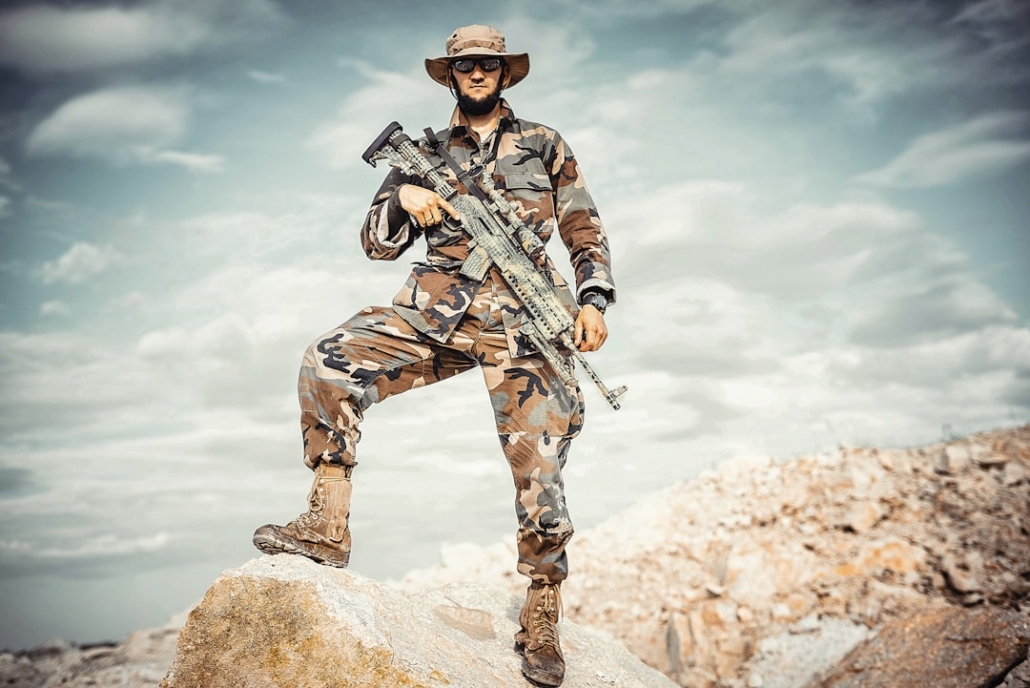
South African President Cyril Ramaphosa has announced a controversial plan to deploy the army into high-crime areas, a move signaling the depth of the nation’s struggle against rampant violence and organized crime.
This decision, affecting three of the country’s nine provinces, marks a significant shift in domestic security strategy for the continent’s leading democracy.
Key Figure/Entity
Stance/Role
Implication
President Cyril Ramaphosa
Initiated army deployment
Seeks to combat rising crime, but risks charges of government failure.
Firoz Cachalia (Police Minister)
Supports deployment
Emphasizes temporary, supportive role for the army under police command.
Crime Experts
Express concern
Argue military is not a long-term solution for domestic law enforcement.
Organized Crime Syndicates
Target of deployment
Involved in gang violence, illegal mining, and drug trade; pose significant threat to state authority.
The Escalating Threat to Democracy and Development
President Ramaphosa described the pervasive crime as the “most immediate threat” to South Africa’s democratic stability and economic future.
This strong rhetoric underscores the severity of the situation, particularly in areas like the Cape Flats in Cape Town, notorious for deadly gang violence.
Gangs such as the Americans and the Hard Livings have long dominated the illegal drug trade, extortion, and contract killings, often endangering innocent civilians.
“The deployment has become necessary due to a surge in violent organized crime that threatens the safety of our people and the authority of the state.” – President Cyril Ramaphosa
Statistics reveal that Cape Town’s surrounding police precincts report some of the highest serious crime rates nationally, with the Western Cape province accounting for approximately 90% of the country’s gang-related killings.
Addressing the Scourge of Illegal Mining
Beyond urban gang warfare, the deployment will also target Gauteng and the Eastern Cape provinces, where illegal mining poses a significant challenge.
The outskirts of Johannesburg are particularly affected by these operations, run by heavily armed syndicates known as zama zamas.
These groups exploit impoverished communities, forcing individuals into dangerous abandoned mine shafts to extract precious deposits.
The illicit mining trade is estimated to cost the country over $4 billion annually in lost gold, fueling broader criminal activities and turf battles that displace residents.
The Political Fallout
Ramaphosa’s decision carries significant political weight, evoking memories of military deployments during the apartheid era.
Critics view the move as an implicit admission that the government is failing to control the crime epidemic, despite the President’s assurances that the army will operate strictly under police command.
While the deployment is intended to be time-limited and stabilize dangerous areas, the long-term effectiveness and potential for unintended consequences will be closely watched by the electorate.
The success or failure of this strategy could significantly impact public trust and the political landscape ahead of future elections, making it a critical test for Ramaphosa’s administration.
https://allcity.info/wp-content/uploads/2026/03/man_wearing_brown_and_1739.jpg7211080datatabhttps://allcity.info/wp-content/uploads/2026/02/all_city_info_logo-300x198.pngdatatab2026-03-01 08:22:442026-03-01 08:22:44Ramaphosa’s Bold Gamble: Will Military Deployment Quell South Africa’s Crime Wave?
We may request cookies to be set on your device. We use cookies to let us know when you visit our websites, how you interact with us, to enrich your user experience, and to customize your relationship with our website.
Click on the different category headings to find out more. You can also change some of your preferences. Note that blocking some types of cookies may impact your experience on our websites and the services we are able to offer.
Essential Website Cookies
These cookies are strictly necessary to provide you with services available through our website and to use some of its features.
Because these cookies are strictly necessary to deliver the website, refusing them will have impact how our site functions. You always can block or delete cookies by changing your browser settings and force blocking all cookies on this website. But this will always prompt you to accept/refuse cookies when revisiting our site.
We fully respect if you want to refuse cookies but to avoid asking you again and again kindly allow us to store a cookie for that. You are free to opt out any time or opt in for other cookies to get a better experience. If you refuse cookies we will remove all set cookies in our domain.
We provide you with a list of stored cookies on your computer in our domain so you can check what we stored. Due to security reasons we are not able to show or modify cookies from other domains. You can check these in your browser security settings.
Other external services
We also use different external services like Google Webfonts, Google Maps, and external Video providers. Since these providers may collect personal data like your IP address we allow you to block them here. Please be aware that this might heavily reduce the functionality and appearance of our site. Changes will take effect once you reload the page.
Google Webfont Settings:
Google Map Settings:
Google reCaptcha Settings:
Vimeo and Youtube video embeds:
Privacy Policy
You can read about our cookies and privacy settings in detail on our Privacy Policy Page.